ToSeven Cockpit
Controls & Safety Sensors
This guide details the core cockpit controls compatible with the T24V1, M15, and T154 display ecosystems, highlights the unique requirements of the LCD135C display, and breaks down the critical wiring and connector standards that keep your bike operating reliably in all conditions.
Total Control: Throttles and Brakes
1. System Architecture: The EB-Bus Wiring Foundation
The ToSeven electronic bicycle bus (EB-Bus) links the handlebar controls directly to the motor controller located inside the drive unit. For bikes utilizing the T24V1, M15, or T154 displays, control signals route through one of two primary multi-branch main cables:
-
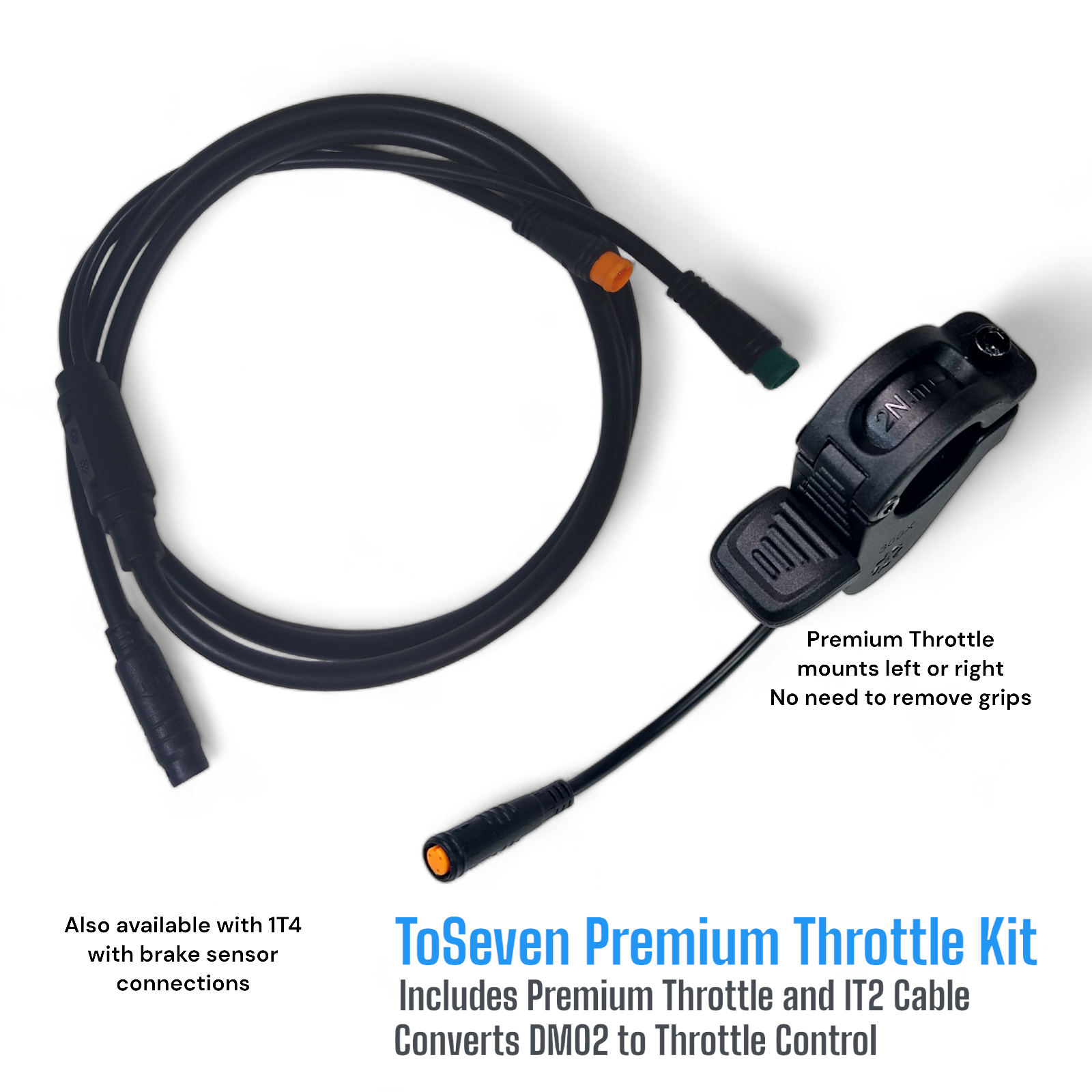
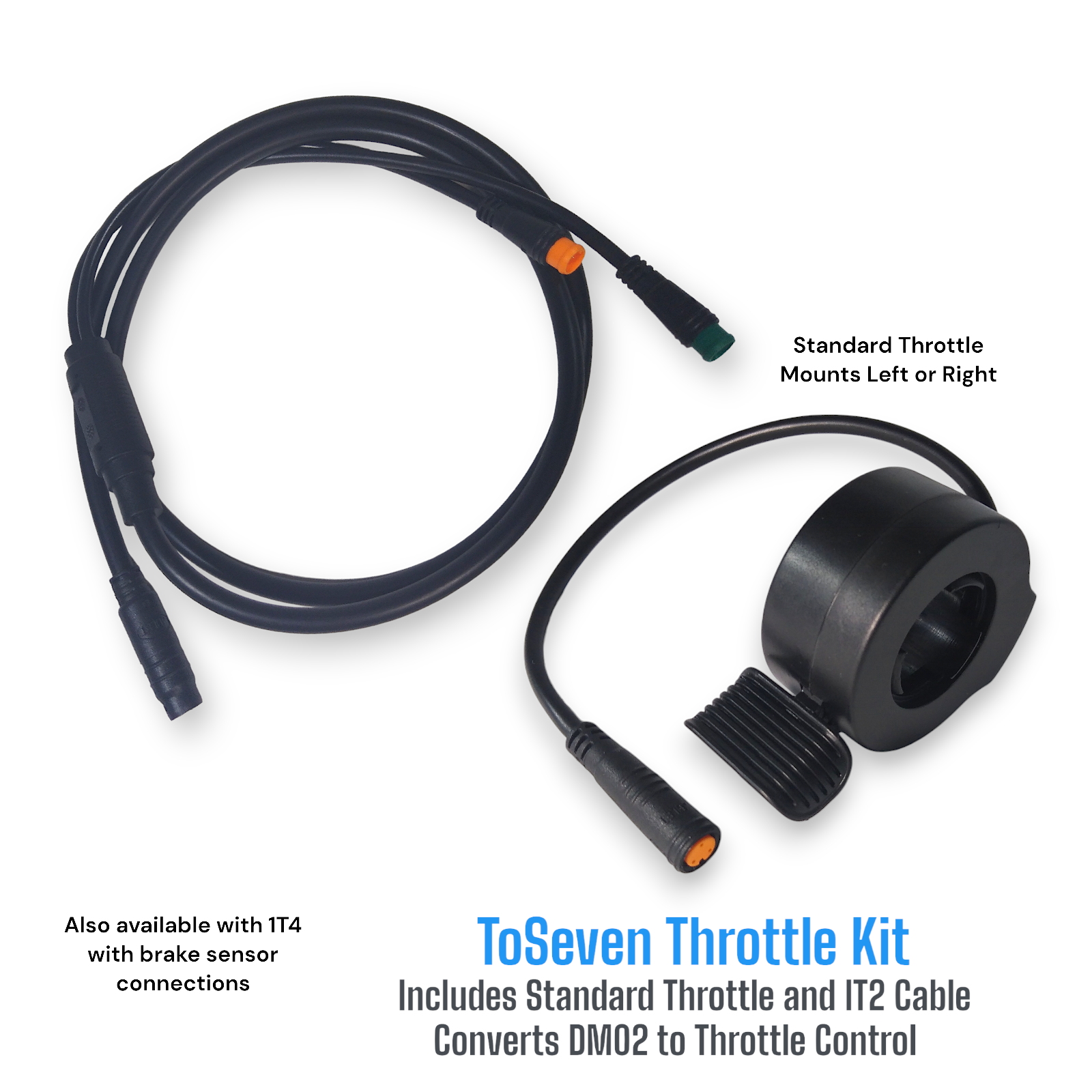
1T2 Connector Cable (2 Branches): Features one green 5-pin Julet connector for the digital display and one yellow 3-pin Julet connector for a throttle. This cable is ideal for streamlined cockpits using pedal assist and on-demand throttle without dedicated brake cutoff switches.
-
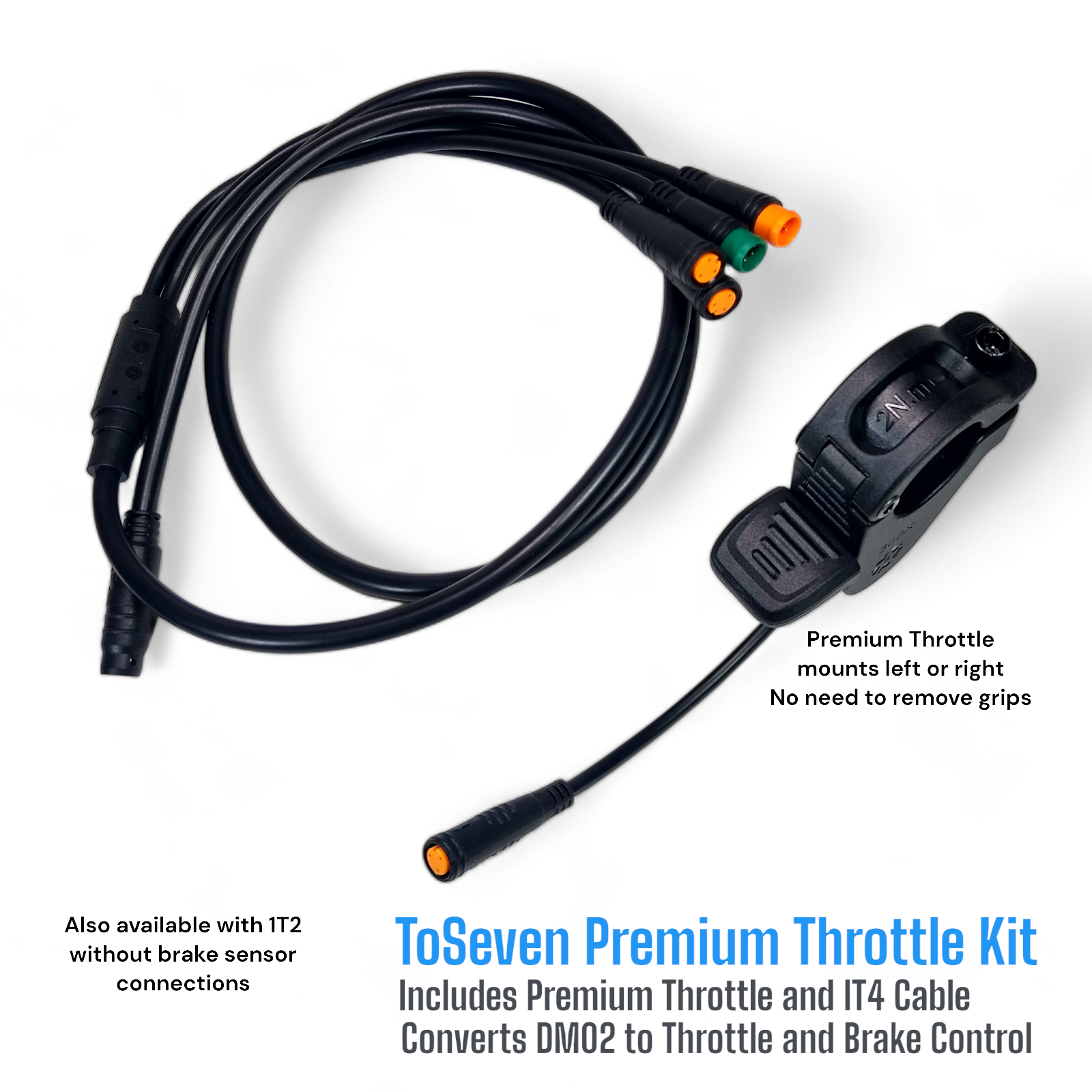
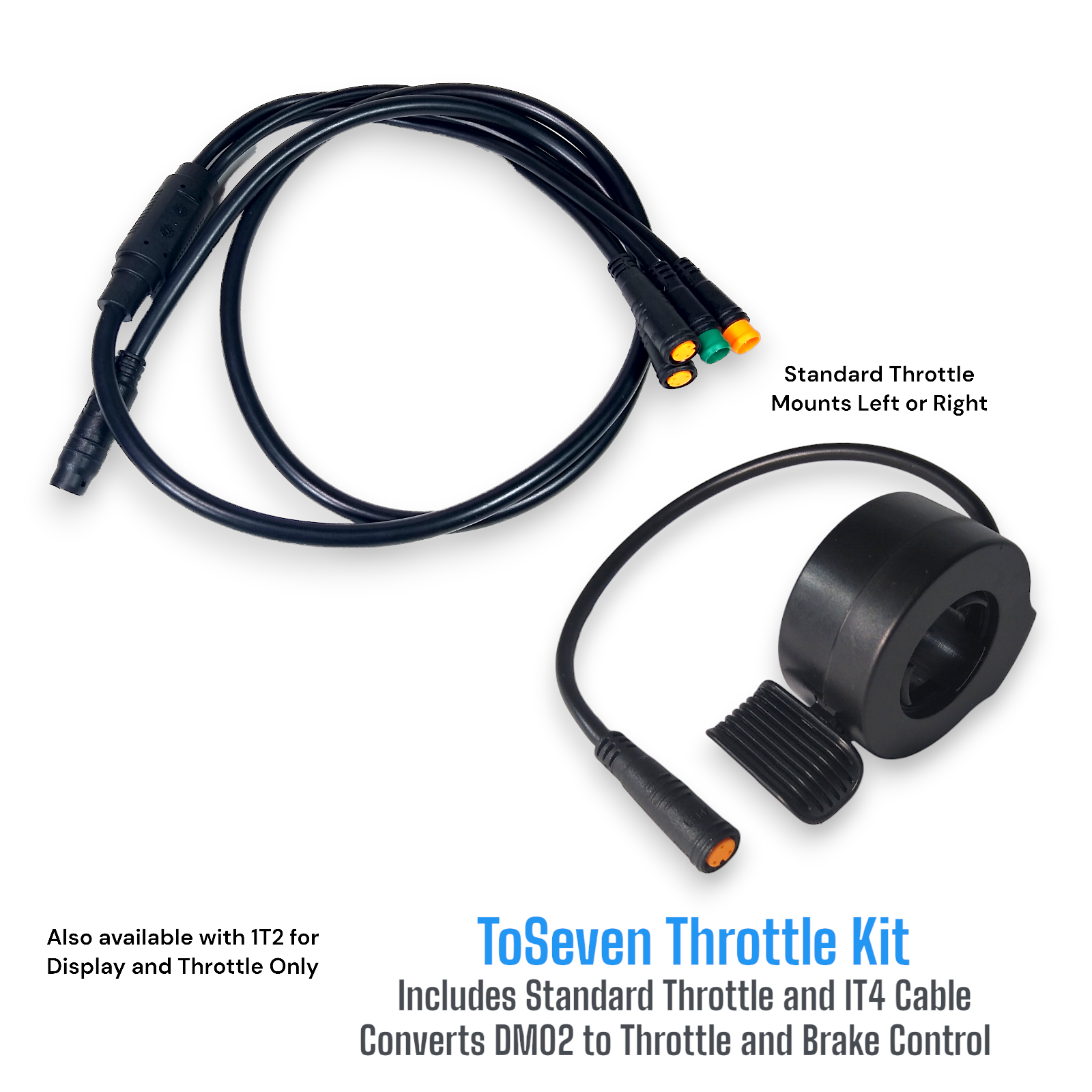
1T4 Connector Cable (4 Branches): Features one green 5-pin Julet connector for the display, one yellow 3-pin Julet connector for a throttle, and two yellow 3-pin Julet connectors for dual brake cutoffs. This is the standard choice for fully equipped, safety-focused builds.
2. Throttle Options: On-Demand Power Delivery
Throttles provide instant electric drive without requiring pedal rotation—essential for navigating traffic intersections, starting on steep inclines, or cruising smoothly.
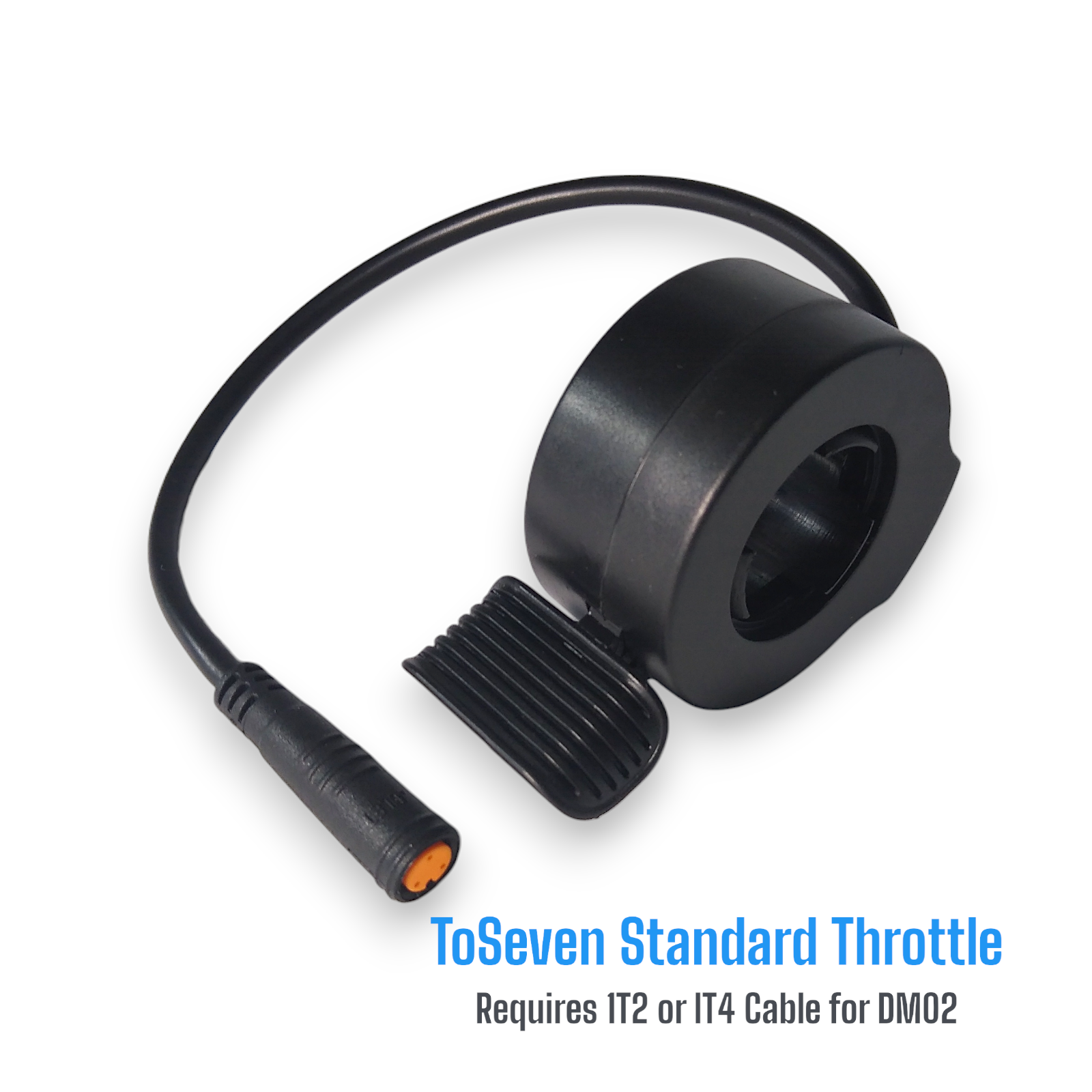
ToSeven Standard Thumb Throttle
-
Mounting Style: Standard slide-on handlebar clamp. Fits standard 22.2 mm handlebars and can be installed on either the left or right side.
-
System Compatibility: Engineered for the DM01 and DM02 mid-drive motors via the yellow 3-pin connector on 1T2 or 1T4 main cables.
-
Operational Characteristics: Uses a traditional spring-loaded lever with a textured thumb pad. It provides linear voltage scaling (0.7V at rest up to 3.3V at full throttle) for predictable power modulation.
-
Best For: Budget-conscious builds and riders who do not mind sliding off handlebar grips during initial assembly.
ToSeven Premium Thumb Throttle
-
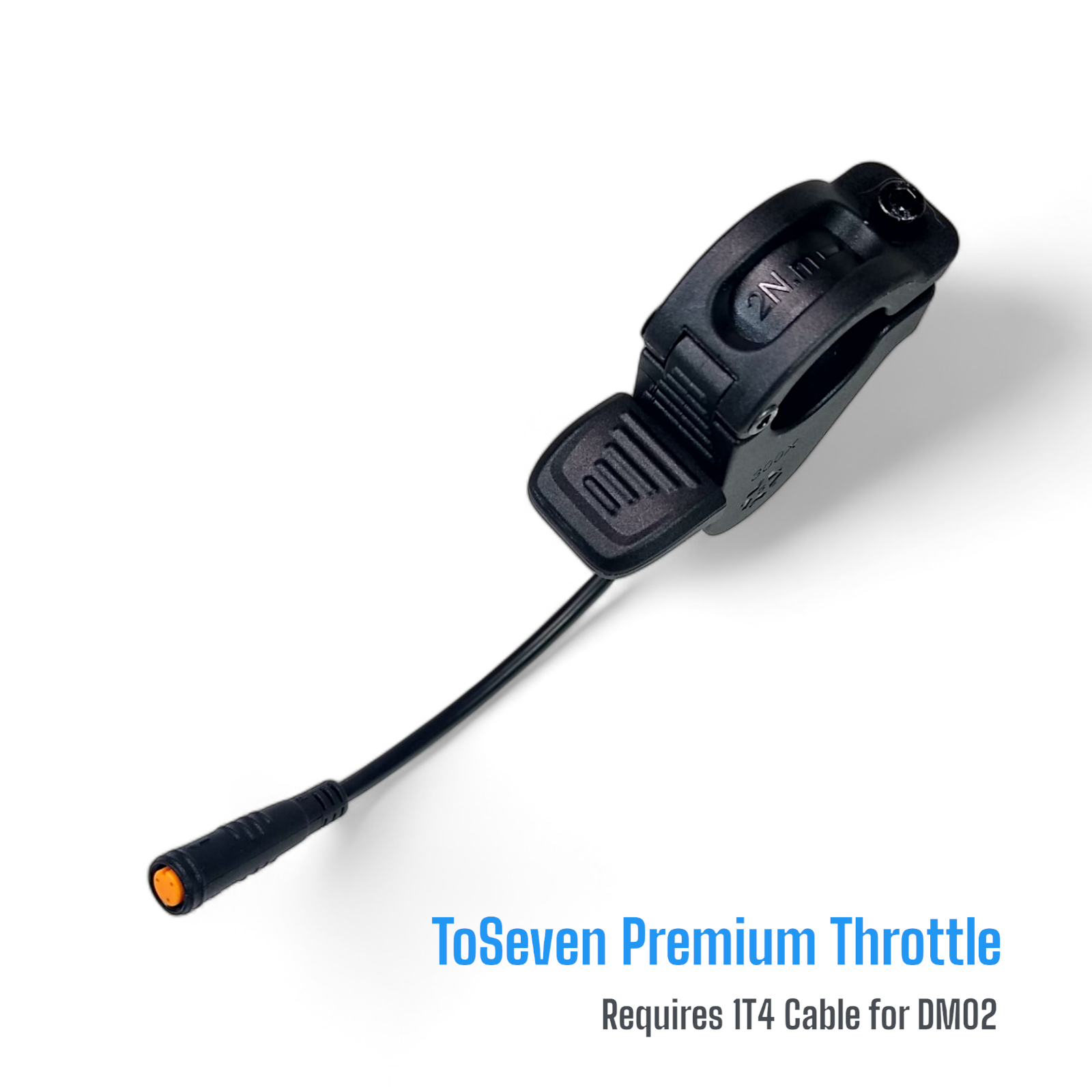
Mounting Style: Easy-mount hinged split clamp. Opens completely to clamp directly around the handlebar without removing grips, brake levers, or gear shifters. Ambidextrous design mounts on either the left or right side.
-
System Compatibility: Plugs directly into the yellow 3-pin throttle lead of 1T2 or 1T4 EB-Bus cables on DM01 and DM02 systems.
-
Operational Characteristics: Features an ergonomically contoured paddle with enhanced mechanical pivot action. The thumb rest offers lower operating resistance and finer control over partial-throttle cruising.
-
Best For: Fast installations, riders with integrated bar-end accessories or lock-on grips, and anyone seeking maximum ergonomic comfort on longer rides.
Coming For The 2027 Season
- Half Twist Throttle - Half grip helps maintain handlebar grip while allowing for a twist throttle using the outer three fingers. Eliminates use of thumb during longer usage.
- Full Twist Throttle - Perfect for true motorcyclists and off-road riders.
3. Brake Cutoffs: Instant Motor Disengagement
Mid-drive motors direct substantial torque through your bicycle’s chain—up to 90 N·m on the DM02 and 160 N·m on the DM01. Sensored brake levers act as an immediate kill switch: the second you initiate braking, the controller cuts motor power, preventing the motor from driving against your mechanical brakes.
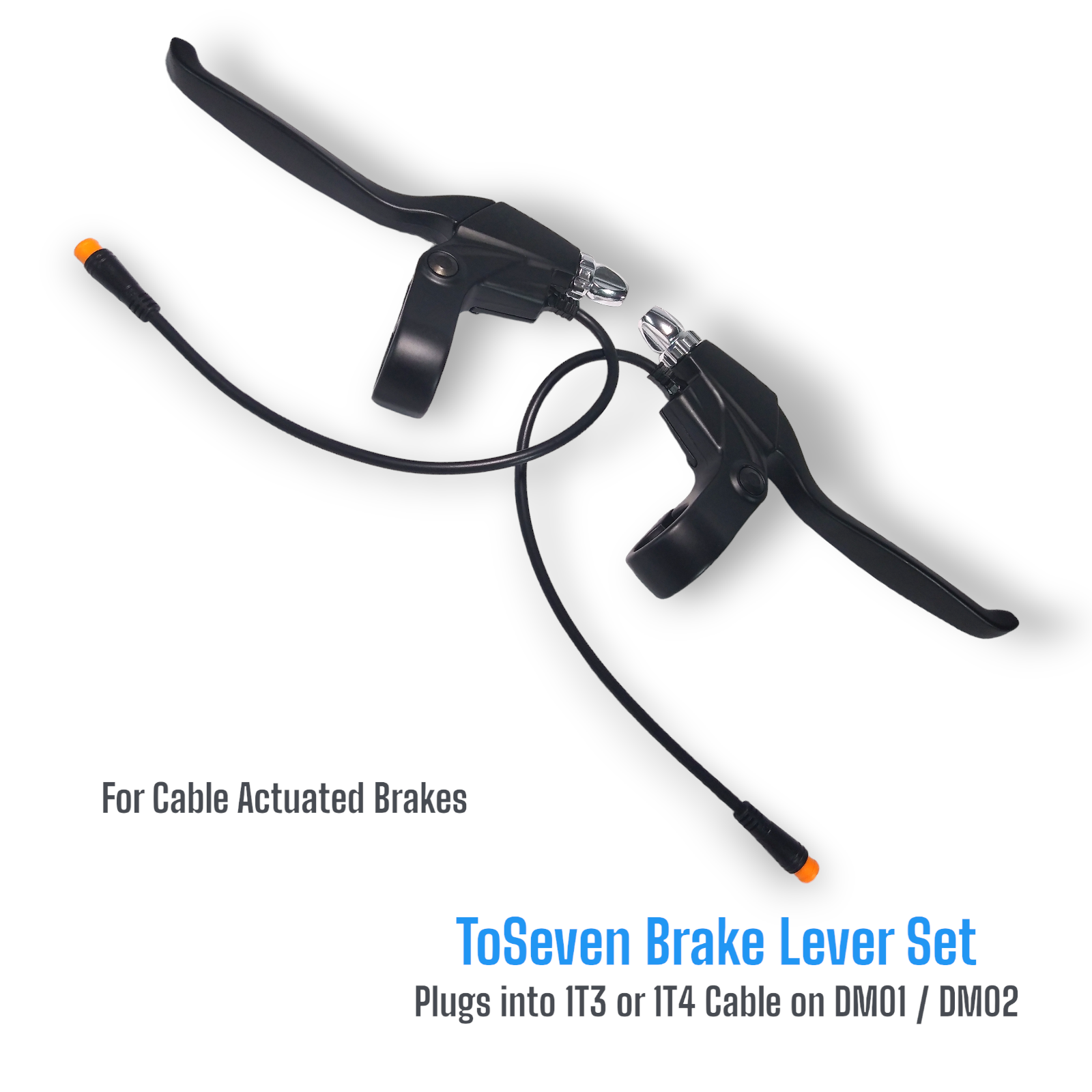
ToSeven Sensored Brake Lever Set (Integrated Cutoff)
-
Design & Mechanism: Complete aluminum brake levers with built-in, sealed internal microswitches.
-
Brake System Type: Designed exclusively for cable-actuated (mechanical) brake systems, such as mechanical disc brakes or traditional rim brakes.
-
Connection: Dual leads plug directly into the twin yellow 3-pin brake branches of the 1T4 main cable.
-
Key Advantages: Cleanest possible handlebar appearance. Because the sensor and wiring are fully sealed inside the lever body, there are no exposed magnets, glue lines, or external sensor pucks.
-
Best For: Complete ground-up conversions on bikes using traditional mechanical cable brakes.
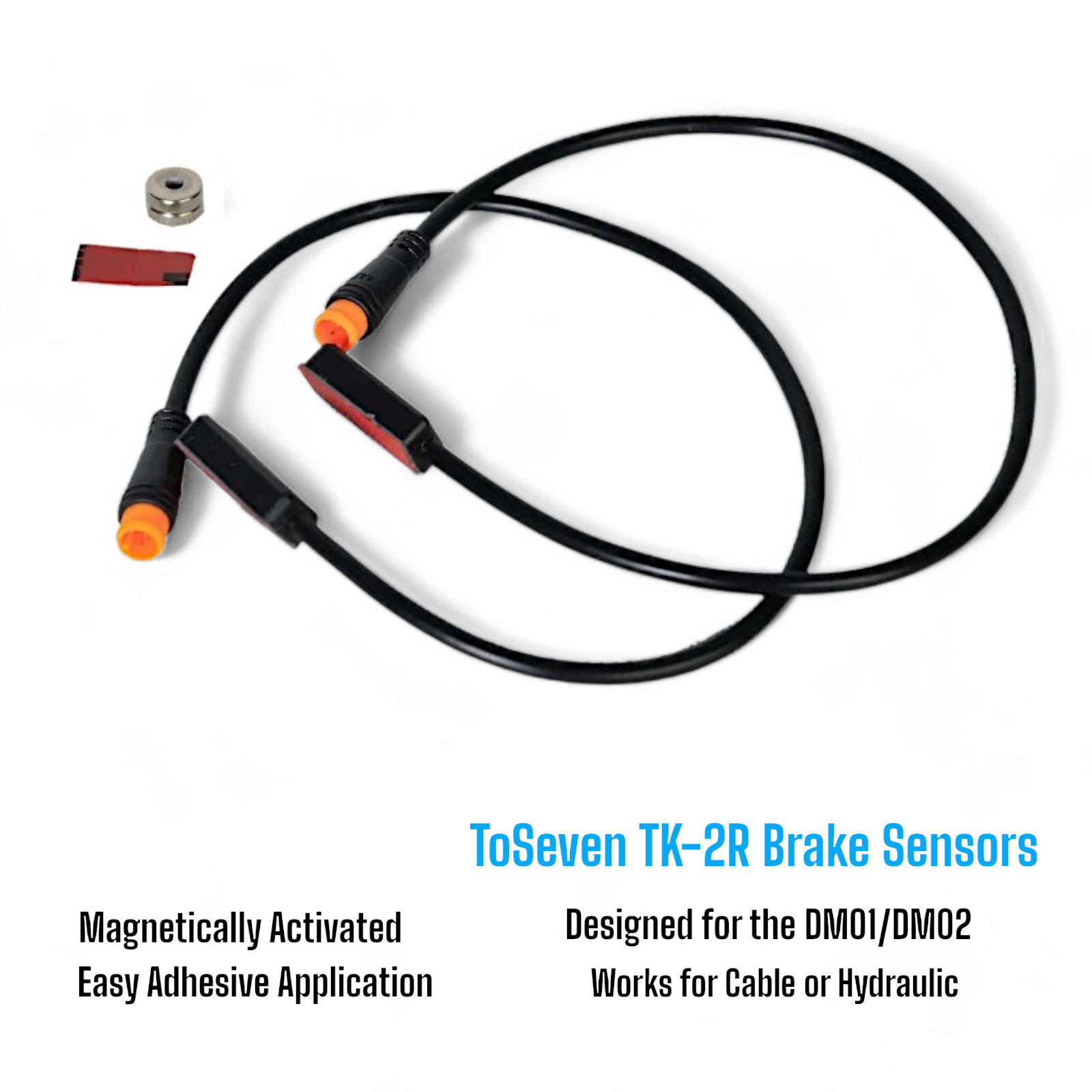
TK-2R Magnetic Brake Sensors
-
Design & Mechanism: Two-piece magnetic Hall-effect sensor kit. An adhesive-backed electronic sensor puck mounts to the stationary lever housing, and a small rare-earth magnet affixes to the movable lever blade.
-
Brake System Type: Universal compatibility—works with both hydraulic brake levers and high-end integrated mechanical brake/shifter combo units.
-
Connection: Plugs into the yellow 3-pin brake branches on the 1T4 cable.
-
Operational Principle: When the brake lever is pulled, the magnet moves approximately 2 to 3 millimeters away from the sensor puck, instantly signaling the controller to cut motor output.
-
Best For: Bicycles equipped with hydraulic disc brakes or premium integrated brake/shifter assemblies that cannot be replaced.
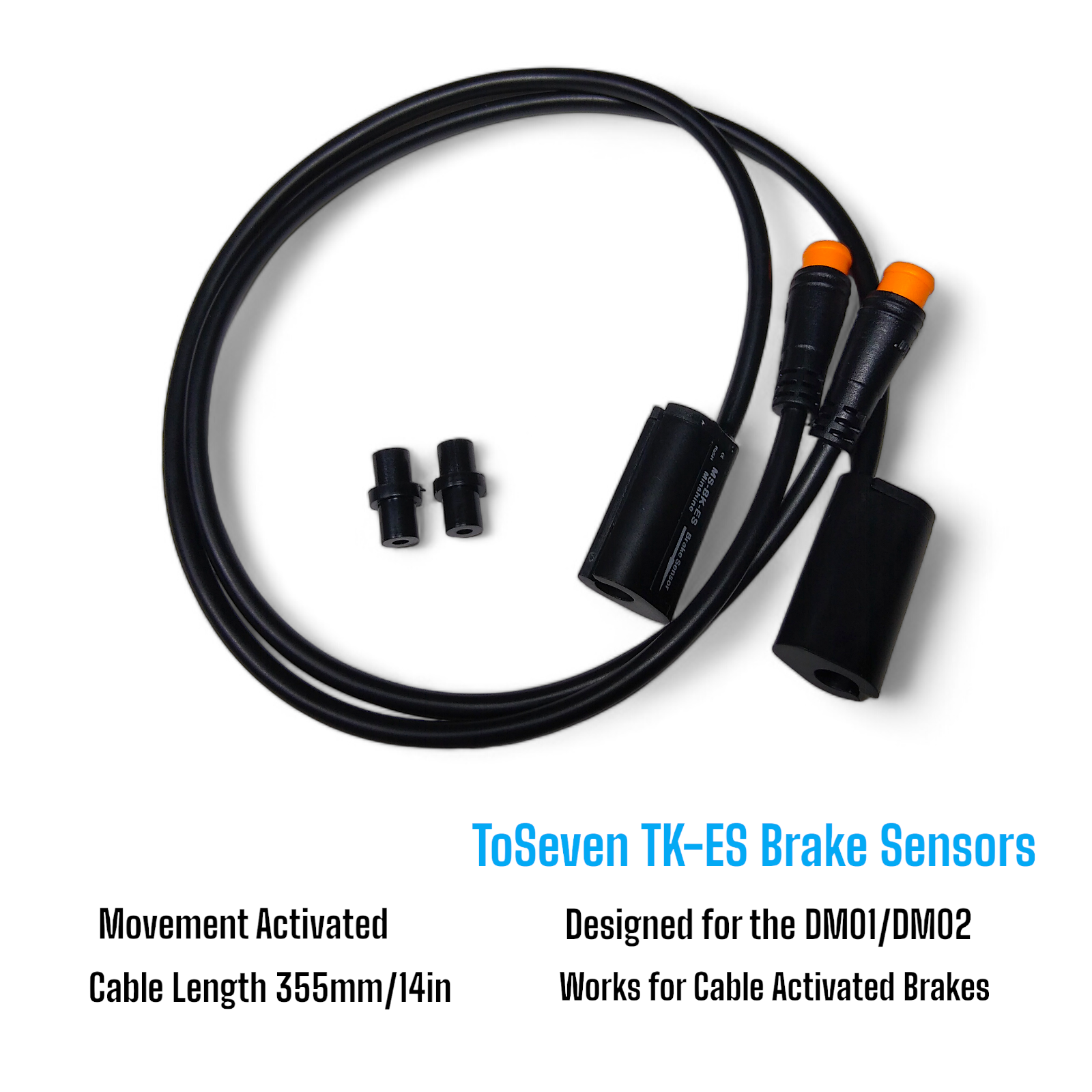
TK-ES Inline Mechanical Brake Sensors
-
Design & Mechanism: Sealed, inline cylindrical sensor that splices directly into the run of your mechanical brake cable housing.
-
Brake System Type: Strictly for cable-actuated brake systems. Not compatible with hydraulic fluid lines.
-
Connection: Plugs into the yellow 3-pin brake leads on the 1T4 cable.
-
Operational Principle: Detects physical travel of the inner steel brake wire when the lever is squeezed, immediately tripping the motor cutoff circuit.
-
Key Advantages: Keeps your handlebars completely uncluttered. The sensor sits discreetly along the frame tube or under the stem, eliminating handlebar magnets and external glue joints.
-
Best For: Mechanical brake builds where you want to keep existing brake levers while maintaining an ultra-clean, minimalist cockpit.
4. Special Architecture: The LCD135C Display Interface
While the T24V1, M15, and T154 displays rely on the centralized 1T2 and 1T4 main harness branches described above, the ToSeven LCD135C (a 3.5-inch color display) uses a distinct wiring layout:
-
Dedicated Hardware & Connectors: The LCD135C system requires specific throttle and brake sensors equipped with matching interface connectors.
-
Direct Display Routing: On LCD135C platforms, the throttle cable connects directly to a dedicated input on the rear housing of the display rather than joining the main harness near the base of the frame.
-
Component Verification: When ordering replacement throttles, brake levers, or harnesses for an LCD135C setup, always verify that the cable lengths, connector pin layouts, and interface leads are explicitly designated for the LCD135C. Standard 1T4 throttle leads intended for T24V1 or M15 configurations will not route properly.
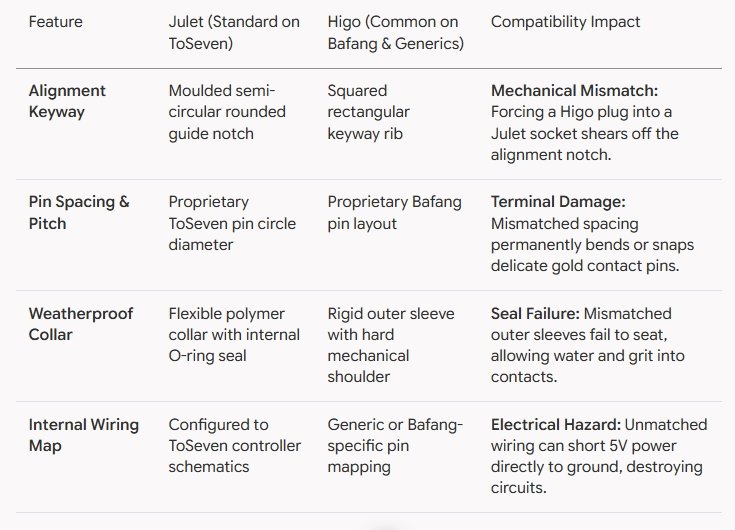
5. Connector Standards: Julet vs. Higo
Miniature waterproof connectors can look nearly identical from the outside, but their internal engineering varies significantly between manufacturers.
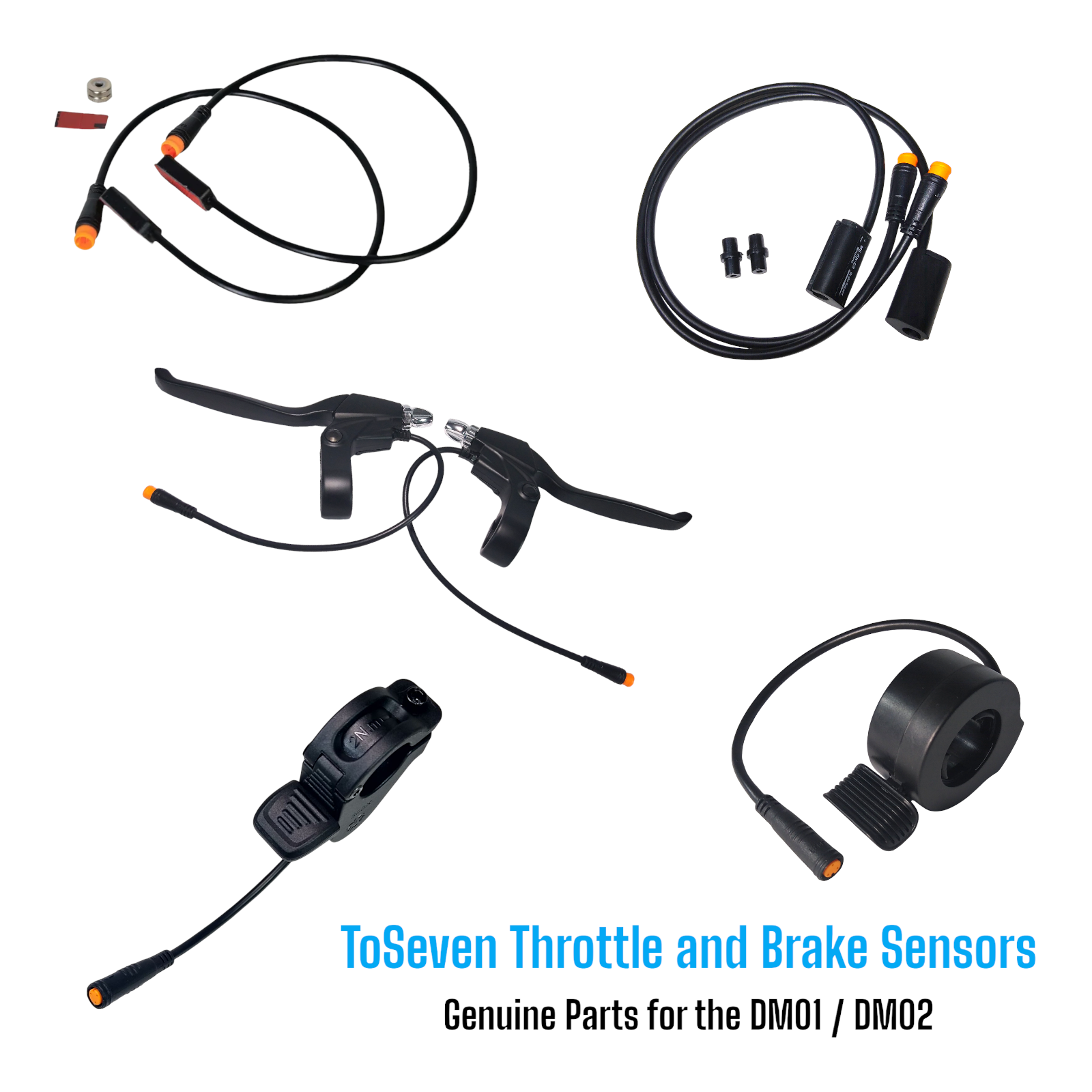
Purchase authentic ToSeven certified throttles, sensored brake levers, brake sensors, EB-Bus wiring harnesses, and complete DM01 or DM02 mid-drive conversion kits directly from our official retail outlets.